Professional solutions on concrete addtives, Concrete Foaming Agent, Superplasticizer, CLC Blocks Additives, and foaming machine


PRODUCT PARAMETERS
Description
Overview of PP Stable Fiber Geotextile 200G/M2 300 G/M2 400G/M2 Nonwoven Fabric For Road Bank Protection
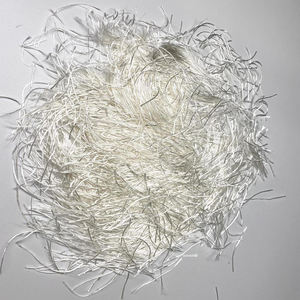
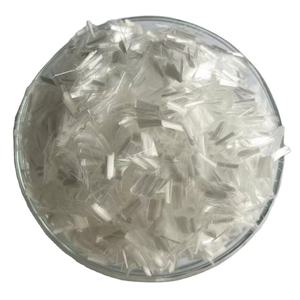
For high-impact resistance, we offer Steel Fibers, an ideal replacement for welded wire mesh in industrial floors and pre-cast elements. We also provide specialized Structural Synthetic Fibers that offer high tensile strength for demanding applications. These fibers are uniformly dispersed throughout the concrete mix, creating a multi-dimensional reinforcement network that traditional methods cannot achieve. This integrated approach simplifies construction, accelerates placement, and enhances the overall integrity and longevity of the concrete, providing a modern answer to age-old cracking and durability challenges.
Features of PP Stable Fiber Geotextile 200G/M2 300 G/M2 400G/M2 Nonwoven Fabric For Road Bank Protection
1. Superior Crack Control and Enhanced Durability:
The primary feature of our fibers is their ability to bridge both micro-cracks that form during the plastic state and larger cracks in hardened concrete. This three-dimensional dispersion creates a more cohesive matrix that resists crack propagation. The direct benefit is a significant reduction in both plastic shrinkage cracking and long-term crack width. This leads to a much more durable concrete with lower permeability, which in turn enhances resistance to water ingress, freeze-thaw damage, and corrosion of any embedded steel. The result is a structure with a longer service life and reduced maintenance costs.
2. Increased Impact and Abrasion Resistance:
Fibers, particularly steel and robust synthetic macro fibers, dramatically improve the concrete’s toughness and post-crack performance. They absorb and distribute energy upon impact or loading. This feature provides the benefit of a more resilient surface that is less prone to spalling, chipping, and abrasion under heavy traffic or mechanical wear. This is a critical advantage for industrial floors, warehouse pavements, and infrastructure projects, leading to a harder-wearing surface that maintains its integrity over time.
3. Construction Efficiency and Cost Savings:
A key feature of using fiber reinforcement is the elimination of welded wire mesh (WWF) in many applications. This provides immense on-site benefits: it simplifies placement, as there is no mesh to be set up or potentially displaced, and it accelerates the entire construction process. By removing a labor-intensive step, projects see reduced labor costs and faster project timelines. The uniform distribution of fibers also ensures consistent reinforcement throughout the entire concrete section, unlike mesh, which can be improperly placed, leading to more reliable and predictable performance.

Specifications of PP Stable Fiber Geotextile 200G/M2 300 G/M2 400G/M2 Nonwoven Fabric For Road Bank Protection
PP Steady Fiber Geotextile is a tough nonwoven fabric produced civil engineering projects. It’s primarily used to safeguard roadways and banks. The textile is made from polypropylene fibers. This material is solid and resists rot and chemicals well. It remains long lasting also in difficult ground conditions.
This geotextile comes in various weights: 200 grams per square meter, 300 grams per square meter, and 400 grams per square meter. The weight indicates thickness and toughness. Heavier weights are stronger. The nonwoven framework is key. It lets water pass through quickly. This stops water stress from developing behind frameworks.
For roadway building, this geotextile separates various soil layers. It stops soft ground from mixing with the rock base. This keeps the road secure much longer. It decreases rutting and pits. It spreads the lots better throughout weak ground. The textile imitates an obstacle. It avoids dirt particles from removing.
Financial institution security is one more big usage. It aids control disintegration along rivers, canals, and inclines. The geotextile holds soil in position. It permits yard or plants to grow origins through it. This develops an all-natural, stable surface. It safeguards against water flow damages. Larger weights like 300g/m ² or 400g/m two are often needed here. They provide more strength versus strong currents.
The 200g/m two variation is good for fundamental splitting up tasks. It’s lighter and easier to deal with. The 300g/m ² supplies a middle level of stamina. It works well for basic support. The 400g/m two is the best choice. It’s ideal for high-stress locations requiring maximum defense. All weights permit water to drain. They remove soil fragments properly. This geotextile is dependable and cost-efficient for facilities jobs.
Applications of PP Stable Fiber Geotextile 200G/M2 300 G/M2 400G/M2 Nonwoven Fabric For Road Bank Protection
PP Stable Fiber Geotextile is a hard nonwoven material made from polypropylene fibers. It can be found in different weights like 200 grams per square meter (G/M2), 300 G/M2, and 400 G/M2. This product is very strong and helpful for shielding roadways and financial institutions.
For roads, this geotextile imitates an obstacle. It quits the soil under the roadway from mixing with the gravel or asphalt layers over. This splitting up is essential. It maintains the road structure steady. Without it, the roadway base can damage. This results in splits and pits. The material also assists with drainage. Water can pass through it quickly. This protects against water from building up and softening the ground under the road. Using the ideal weight is necessary. Lighter 200 G/M2 fabric is good for separation and drain in numerous roadway jobs. Heavier 300 G/M2 or 400 G/M2 textile includes extra strength. It reinforces the dirt, especially on soft ground or high slopes near roads.
Bank defense is one more major use. Riverbanks, lakeshores, and canal edges encounter erosion from water circulation and weather. This geotextile assists hold the dirt in place. It is commonly positioned under rocks or concrete blocks used for armoring. The material prevents the soil beneath from getting rid of through the gaps in the armor layer. It imitates a filter. Water drains, however soil fragments remain caught. This maintains the bank undamaged. For financial institution jobs, the heavier weights like 300 G/M2 and 400 G/M2 are common choices. They offer the required toughness and resilience versus strong water forces.
Selecting the right weight depends on the job. Think of the dirt kind, the incline steepness, and the expected water pressure. Heavier fabric deals with harder conditions. This geotextile is reliable and lasting. It makes framework like roadways and banks stronger and safer.
Company Profile
We are the global leader in lightweight concrete and advanced engineered foam solutions. Known globally for its commitment to research, innovation, and applied expertise, we have been providing engineered foam solutions since the early 2012’s.
We can supply high-quality concrete admixture and foam concrete related products all over the world.
The company has a professional technical department and quality supervision department, a well-equipped laboratory, and equipped with advanced testing equipment and after-sales customer service center.
If you are interested, please feel free and contact us.
Payment
T/T, Western Union, Paypal, Credit Card etc.
Shipment
By air, by sea, by express, as customers request.
5 FAQs of PP Stable Fiber Geotextile 200G/M2 300 G/M2 400G/M2 Nonwoven Fabric For Road Bank Protection
Here are answers to five common questions about our PP Stable Fiber Geotextile Nonwoven Fabric for road and bank protection. People often ask what this fabric actually is. It is a synthetic material made from polypropylene fibers bonded together. This process creates a strong, durable sheet. This geotextile acts as a barrier. It separates different soil layers effectively. It allows water to pass through easily. This prevents soil mixing and keeps water moving.
Another question is why choose nonwoven fabric. Nonwoven geotextile is excellent for separation and filtration jobs. It handles water flow well. It stops soil particles from clogging drainage systems. The fabric provides good cushioning. This protects structures like roads or riverbanks. It is generally more cost-effective than woven options for these uses.
People want to know the difference between the weights like 200g/m², 300g/m², and 400g/m². The weight directly relates to the fabric’s thickness and strength. Heavier fabrics like 400g/m² are thicker. They offer greater puncture resistance. They are suited for tougher jobs or longer-lasting projects. Lighter weights like 200g/m² are thinner. They work well for less demanding separation tasks. The 300g/m² offers a good middle ground.
How to install this geotextile is a key concern. Proper installation is crucial. First, prepare the soil surface. Remove any sharp objects or large rocks. Unroll the fabric smoothly over the prepared area. Overlap adjacent rolls sufficiently. Secure the fabric edges properly. Cover it with soil or aggregate quickly. This prevents wind damage or UV exposure before it’s protected.
Many customers ask about the product’s lifespan. This geotextile is designed to last a long time. Its durability comes from the stable polypropylene material. It resists rot, mildew, and many chemicals found in soil. Its performance depends on correct installation. It also depends on the specific ground conditions and stress levels it faces. Used properly, it provides reliable protection for years.