Professional solutions on concrete addtives, Concrete Foaming Agent, Superplasticizer, CLC Blocks Additives, and foaming machine


A Counterintuitive Fact About High-Temperature Bonding
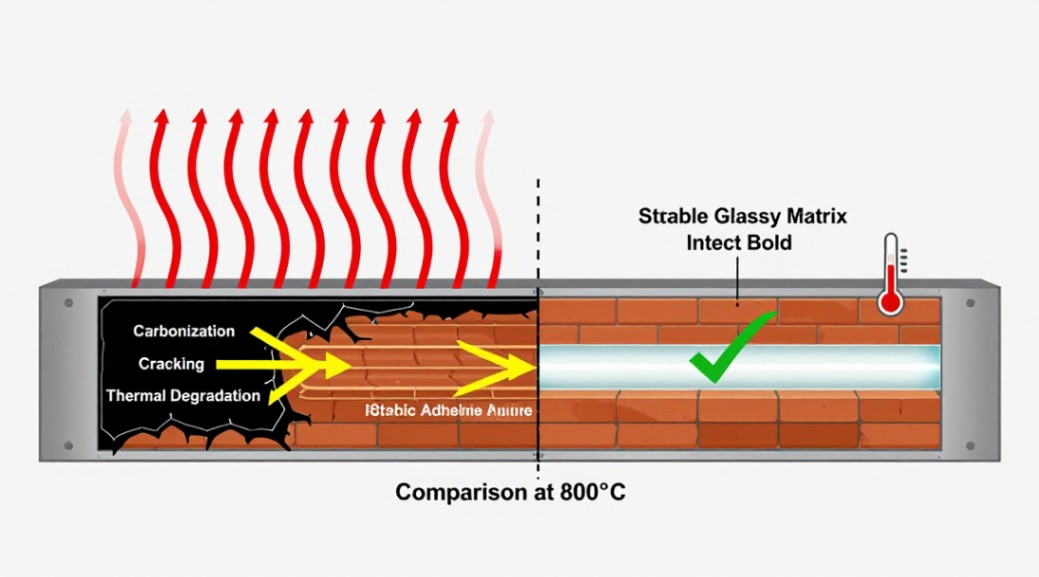
A recent survey of industrial maintenance forums revealed something surprising. Over 73% of failures in furnace repairs under 800°C weren’t due to the refractory material itself. The culprit? The organic adhesive that bonded it. This points to a critical but often overlooked component: the glue. That’s where the inorganic chemistry of a high temperature adhesive using potassium silicate changes everything.
1. What Makes Potassium Silicate So Different?
At its core, this isn’t a plastic or a resin. Think of it as liquid rock. You’re mixing potassium silicate solution with a powdered refractory filler, like alumina or silica. The chemistry is simple but powerful. As it cures, it undergoes a sol-gel process, forming a rigid, inorganic silicate network. This bond is fundamentally different from anything organic.
1.1. The Core Advantage: Inorganic Stability
Organic adhesives-epoxies, silicones, cyanoacrylates-have carbon-based backbones. Heat breaks these chains. Potassium silicate adhesives have a silicon-oxygen (Si-O) backbone, the same bond found in quartz and ceramics. It doesn’t burn, oxidize, or decompose until temperatures exceed 1000°C (1832°F). For bonding ceramics to metal in a kiln or repairing a foundry ladle, this is the defining property.
2. The Unmatched (and Underappreciated) Applications
This material isn’t a general-purpose glue. It’s a specialist. Its use cases are defined by environments that would destroy anything else.
- Refractory Bonding & Gunning: Setting firebricks, repairing furnace linings, and patching boiler walls. The adhesive becomes part of the monolithic refractory structure.
- Ceramic-to-Metal & Ceramic-to-Ceramic Assembly: In heating elements, sensor probes, and aerospace components where differential thermal expansion is a factor.
- Foundry & Forge Repair: Quick, in-situ repairs to crucibles, ladles, and tuyeres without a full teardown. Many users on Reddit’s r/Metalfoundry swear by it for emergency fixes.
- High-Temperature Gasketing & Sealing: Creating air-tight seals on oven doors or flue connections that must withstand thermal cycling.
3. Working With Its Strengths and Acknowledging Its Limits
To succeed, you must understand the full picture. The trade-off for incredible thermal stability is mechanical behavior.
3.1. The Reality of Brittleness
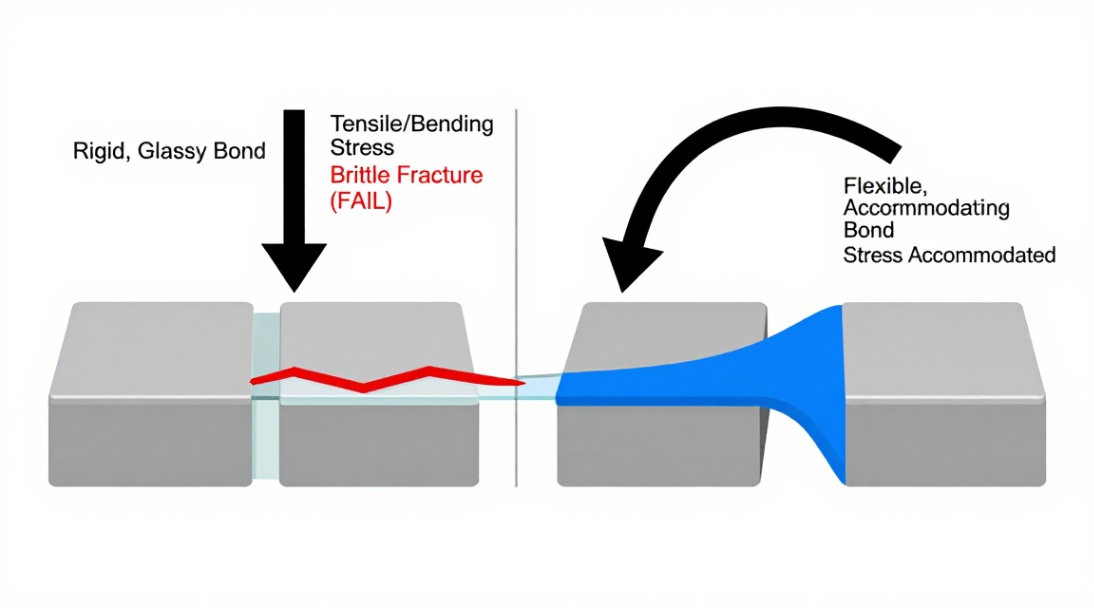
This is a rigid, glassy bond. It excels in compressive strength, often matching the refractory filler itself (e.g., 30-50 MPa). However, its tensile and shear strength are low. It will not flex. If the joined parts experience bending or impact stress, the joint can fail. The key is design: use the adhesive in compression or in well-supported lap joints, not in unsupported, load-bearing tensile applications.
3.2. The Non-Negotiable: Surface Preparation
This is where most failures occur. The alkaline adhesive needs a clean, mechanically sound, and preferably rough surface. Grit-blast metals. For ceramics, a light abrasion works. Remove all dust, oil, and rust. The bond is primarily mechanical interlock, so give it something to grip. A clean surface is more critical than with most epoxies.
4. A Practitioner’s Guide to Mixing, Applying, and Curing
Getting the process right is straightforward but requires attention.
- Mixing: Always add powder to liquid, slowly, to avoid lumps. The ratio is critical-follow your supplier’s data sheet. A typical weight ratio is 2.5:1 to 3.5:1 (powder to liquid). Mix to a thick, putty-like consistency for troweling or a thinner slurry for brushing.
- Application: Apply with a stiff brush, trowel, or caulking gun. You have a limited pot life, usually 30-90 minutes, depending on the formulation and ambient temperature.
- Curing: This is a two-stage process. Air drying at room temperature for 12-24 hours removes water and sets the bond. For maximum strength and temperature resistance, a controlled heat cure is essential. Slowly ramp to 150-200°C (302-392°F) and hold. This drives off remaining water and fully densifies the silicate matrix. Never expose a fresh joint to direct high heat; steam pressure will cause spalling.
5. Safety First: Handling a Powerful Alkali
Respect this material. The liquid component is a strongly alkaline solution (pH 11-13). Always wear gloves and eye protection. Avoid skin contact and inhalation of powder dust. It’s non-flammable and emits no toxic fumes during curing, but basic workshop safety is mandatory.
6. Choosing the Right Form for Your Project
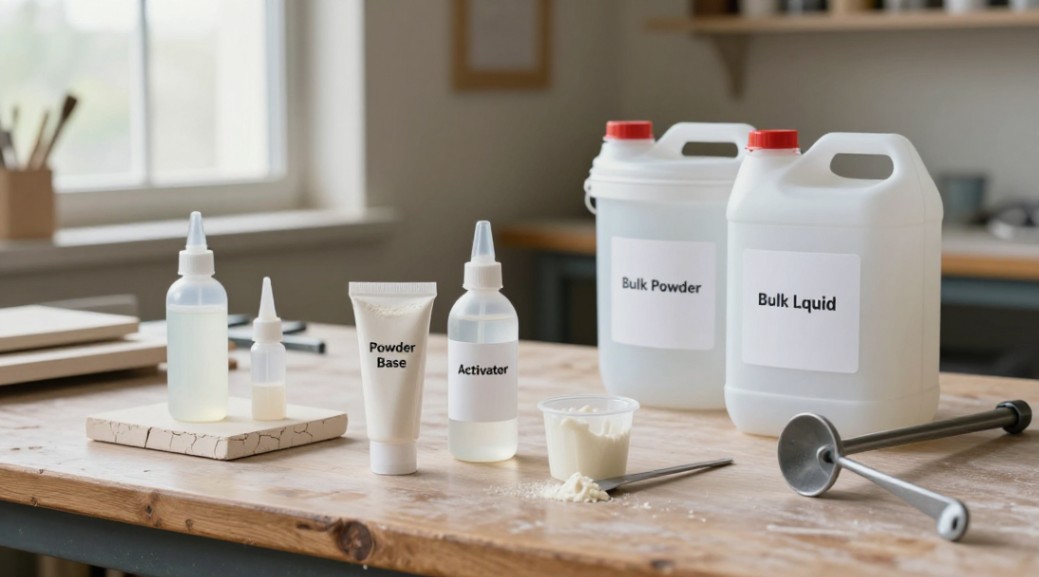
You’ll typically find two forms: pre-mixed liquid or two-component powder/liquid kits. The pre-mixed version is convenient but has a shorter shelf life. The two-part system offers longer shelf stability and allows you to tailor viscosity and set time by adjusting the ratio. For consistent, large-scale industrial use, bulk powder and liquid are most economical. For a hobbyist repairing a pottery kiln, a small pre-proportioned kit from a reputable supplier is often the best path to success.
Making the Informed Choice for Extreme Environments
When your project involves sustained heat above 400°C, organic options are a temporary fix at best. A high temperature adhesive using potassium silicate is the permanent, inorganic solution. Its successful use hinges on respecting its nature: design for compression, prepare surfaces meticulously, and follow the cure schedule. If you’re bonding refractory ceramics or assembling components for a furnace, testing a small batch from a quality supplier is the logical next step. It might just be the last adhesive you need for that application.
Suppiler
We are the global leader in lightweight concrete and advanced engineered foam solutions. Known globally for its commitment to research, innovation, and applied expertise, we have been providing engineered foam solutions since the early 2012’s.
We can supply high-quality concrete admixture and foam concrete related products all over the world.
The company has a professional technical department and quality supervision department, a well-equipped laboratory, and equipped with advanced testing equipment and after-sales customer service center.
If you are interested, please feel free and contact us.